About Reid Prevention
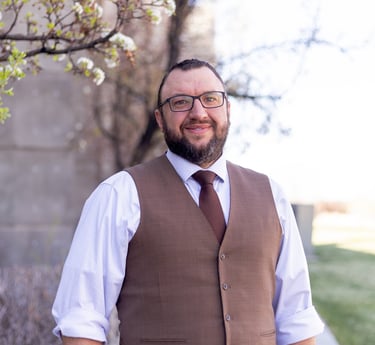
Logan Reid began his career in behavioral health as a program developer and facilitator at the Wellness Center of Utah Tech University. He later assumed the role of Director at a level 6 youth correctional facility in Utah. His program was designed for youth with diagnosed behavioral disorders, particularly specializing in clients who had histories of substance use and sexual offenses. Although the work was challenging, he loved it, but often felt frustrated by the pressing need for more intensive treatment when many of the issues these adolescents faced stemmed from a lack of effective prevention services.
After completing graduate school, (with degrees in Sociology & Mental Health & Wellness), Logan became a Licensed Prevention Specialist and has dedicated the past 20 years to this passion.

& Education Services
He is a certified Substance Abuse Prevention Skills Trainer (SAPST) for the Prevention Technology Transfer Center (PTTC), a certified Mental Health First Aid (MHFA) instructor, and a recognized Communities That Care (CTC) trainer. He has facilitated workshops for CADCA, the National Prevention Network, and many state prevention organizations, and is a highly sought-after speaker on a variety of prevention subjects. He has also taught Sociology at the University level for the past 20 years and is currently on faculty at Utah Tech University. Logan takes pride in practical application, translating the science of behavior change into a clear and accessible format so that it can be effectively moved from theory to practice.
A Sampling of Topics Logan is Known For:
Prevention Science 101
Primary vs Secondary Prevention
Skill-based Prevention Programs versus Scare Tactics
The Strategic Prevention Framework
The Public Health Model
Risk/Protective Theory
Policy Work & Primordial Public Health
Community Mobilization and Coalition Development
Management, Supervision and Leadership in Behavioral Health
Research on effective/ineffective prevention strategies
Environmental vs Individual Prevention Strategies
Target Audiences for Prevention Services, (Universal, Selective, Indicated)
7 Strategies for Community Change
Community Readiness Assessments
12 Community Sectors for Quality Engagement
Developing and Running Youth Coalitions & Their Advisors
Media's Influence and Media Literacy
Ethics in Prevention
And more...
Recent Presentations & Workshops:
Unleashing the Uncle Influence: The Protective Role of Extended Family, (National Center on Youth Prevention, Treatment & Recovery - 2026)
Shifting Paradigms to Shift Gears: A Sustainable Approach to Preventing Drug Use, (Rural Health Association Conference - 2025)
Preventing Substance Use from Community to Primary Care, (Southern Illinois University Addiction Conference - 2025)
Global to Local Behavioral Health Trends: How to Use Prevention Science, (Southern Utah University - 2025)
How Media Influence Impacts Drug Use & How to Combat It, (School Resource Officer Prevention Skills Training - 2025)
Chainsaws & Popsicles: The Social Development Strategy in Schools & Community, (Rural Communities Opioid Response Training - Washington D.C. - 2025)
Marijuana Use & Mental Health, (Utah Fall Conference for Law Enforcement, Treatment & Prevention - 2024)
How the Opioid Epidemic Won’t End Until We Do Prevention, (Promising Youth Conference - 2024)
Environmental Scans: Practical Application, (Wyoming Prevention Network Conference - 2023)
Student Athlete Drug Prevention & Program Development, (National Prevention Network, Birmingham, AL - 2023)
Prime for Life: An Early Intervention, Psychoeducational Course for DUI & Drug Use, (Justice & District Court Judges Conference - 2022)
Increasing Family Attachment and Decreasing Underage Alcohol Consumption, (Washington D.C. CADCA Leadership Conference, 2020)
How Enforcement Can Impact Perception of Risk & Reduce Drug Use, (Mountain West Law Enforcement Summit - 2021)
The Public Health Model: How I Almost Died of Dengue Hemorrhagic Fever at the Base of the Andes Mountains, (SAPST Training)
Risk/Protective Factor Theory: Understanding Predictors for Youth Problem Behaviors, (Bryce Youth Leadership Training)

I never get tired of watching Logan present. There's something about his approach that keeps me engaged every time!
Sara


Typically after an all-day training, I can't wait to be done. This might be the first time I actually hoped the presenter would go overtime. (But I'm glad he didn't...)
Tre


★★★★★
★★★★★
The Story Behind the Logo
The short version?
Well, I spent way too much time, thought and energy on trying to be clever and creative and deeply meaningful. The result: A combined mountain and wolf, both ancient symbols representing knowledge, wisdom, learning and instruction. The Mountain represents the objective, upstream vision and rigorous authority of my evidence-based consulting, paired with the Howling Wolf, which symbolizes the intuitive intelligence and unifying leadership and communication required to implement successful community-wide, primary prevention strategies.
The medium version:
The Mountain Wolf: The Nexus of Wisdom and Strategic Foresight - The Mountain, an ancient symbol of knowledge, wisdom and revelation, symbolizes the structural authority and ultimate vantage point necessary for system-level change. Historically regarded as the seat of divine knowledge and instruction, the Mountain represents the difficult ascent required for rigorous analysis and the stable foundation necessary for sustainable strategy. We position ourselves at this elevated "upstream" vantage point to gain the objective clarity required to identify the root causes of public health challenges, ensuring that our solutions are comprehensive and built for enduring resilience.
Complementing this structural authority is the Howling Wolf. Historically a symbol of communication, wisdom and logic, the wolf, and specifically its howl, is the primal embodiment of guided intelligence and community stewardship. Revered across cultures as a teacher, master, and loyal pathfinder, the Wolf represents my commitment to translational science: blending keen observation with experience and research to navigate complex organizational dynamics, (is that a lofty goal, or what!?). The Wolf’s pack ethos reflects my focus on universal primary strategies, mobilizing collaboration and teamwork for the common good. The Howl is a call to action—our strategic voice, unifying the community around decisive, evidence-based direction... too much? [shrug]. I like it.
The looong version:
I was excited about the prospect of starting my private business, so much so that I jumped into it and started accepting jobs before I really had anything formal up and running. Eventually, I realized I needed to do that, but what about a name and logo? I struggled for months, and even created an email and website with a different name before finally realizing I should just be simple and straightforward and name it what it is, Logan Reid's Prevention & Education Services; I omitted my first name for brevity, (something I'm not known for, case in point, look at what you're reading).
Next, I needed a logo. I started with the stereotypical circle and shield, but quickly dismissed that. Soon, I was focused on the text, and just tossed in different random shapes to give it some personality. But every time I did this, I would cringe at the meaninglessness of that random design. Eventually, I did what I love to do, and dove right down a rabbit hole researching ancient symbols and their meaning. Before long, I had compiled a detailed report on the topic of The Mountain, The Wolf, and then later, The Howling Wolf. Building the logo was simple, I had it done within a few hours, but choosing what it would be made of and researching and thinking through it, well, that was a ridiculously long and probably unnecessary process, but those who know me will not be surprised by it, (and also won't ever read this because they'll see the "short version" and know that's all they really need to know, if that).
THE MOUNTAIN:
Anciently, the motif of The Mountain as a site of ultimate knowledge, wisdom, and revelation is shared across many cultures, serving as a universal symbol of the spiritual high-ground. In Hinduism, Buddhism, and Jainism, the mythical Mount Meru is the quintessential example, representing the axis mundi and the cosmic center around which the universe revolves; its towering height symbolizes the ascent of the spiritual practitioner toward enlightenment and high spiritual attainment. Similarly, in East Asian traditions, the act of "entering the mountains" is synonymous with seeking meditation and wisdom from primal powers. Among Indigenous cultures, such as the Navajo (Diné), sacred mountains are not merely geographical features but are revered as living entities and educators that provide essential knowledge, sacred songs, and wisdom necessary for a balanced life. In Christian culture The Mountain is historically and theologically designated as the ultimate site of instruction and revelation, with phrases like "the mountain of divine knowledge" reinforcing the link between altitude and intellect. The more I studied this, the more certain I was about using it as the foundation for my logo.
And I just kept thinking of other symbolism:
The benefit of a high vantage point as metaphor to the benefits of experience, study and the evidence-based foundation of everything I do in prevention work.
The Mountain as an enduring symbol of strength, solidity, and stability as a metaphor for effective prevention strategies demanding long-term commitment, often facing initial resistance and requiring years to demonstrate quantifiable systemic returns.
The Mountain is intrinsically linked to upward movement, ascension, and transcendence. By linking this geological feature to the prevention metaphor, one of my foundational principles being a focus on Primary Prevention yields a connection to the idea of "upstream" thinking and services, addressing root causes and cultivating resilience across populations before mental illness or substance use disorders manifest.
THE HOWLING WOLF:
And then there's the wolf; a guide, a teacher and a communal leader. While the Mountain establishes the conceptual framework and authoritative foundation of my business, I kept coming back to the symbol of the wolf, which holds significance across numerous cultures, admired for its bravery and wisdom, a teacher of new ideas, and an agent of transformation. It is often depicted as a guide in the animal kingdom, a keen observer, silently monitoring their surroundings to understand subtle social dynamics and potential threats, and they are known to pass knowledge from one generation to the next. This seemed appropriate, maybe even necessary as a focus for my business. Consulting demands not only the mechanical application of rigorous, technical data (evidence) but also a deep sensitivity to organizational culture, unspoken anxieties, tacit knowledge, and unwritten assumptions. The Wolf, therefore, functions as the Translational Science Guide, bridging the gap between the static truth derived from the mountaintop analysis and the dynamic, nuanced reality of implementation on the ground, (something I'd like to believe I have some talent and ability with). The Wolf assures clients that the guidance provided is not just technically correct but contextually astute and adaptable, leveraging both academic rigor and real-world intelligence. It then becomes a metaphor for the necessary operational intelligence needed for quality consulting in this field, guiding the translation of abstract, elevated knowledge into actionable behavior and collective system change.
At this point, I found myself toying with different combinations of wolf and mountain, but before I had developed something I really liked, I came across more information about the Howling Wolf. The inclusion of the howling wolf introduces a dynamic element of communication. Biologically, the howl is a critical, complex form of communication used to assemble the pack, mark territory, signal alarm, and communicate position. Mythologically, howling wolves were sometimes interpreted as spiritual beings speaking the language of profound knowledge. As soon as I shifted to a Howling Wolf, the merger of the Wolf and Mountain happened very quickly. Using Photoshop, I had created the beginnings of the logo I now use within minutes, and then it was just a matter of fine-tuning it until it was what I wanted.
IN SUMMARY:
The power of the logo rests in the dynamic synthesis of the two archetypes: the static, unwavering authority of the Mountain, with its unique perspective and enhanced vantage to promote upstream thinking, combined with the dynamic, adaptive intelligence and innate leadership and purposeful guidance of the Wolf. Consulting work involves deep analysis (the quiet observation of the wolf ), but its impact is realized through powerful external communication that unifies efforts - the howl, which represents communication: the call to galvanize collective action, cutting through the noise of downstream crises to make the essential, often-unheard, voice of Primary Prevention resonate powerfully across the field of public health.
I know, it's a little intense, and maybe there is way too much deep-thought, so how about this: I love the mountains, (and live in them), and I love wolves, (always have). Just as well these to represent my business as some random, flowery design. Right?